Traveling on the Orphan Train
Students read about the Orphan Train and compare and contrast how that philanthropic effort has evolved today.
The learner will:
- compare and contrast philanthropic efforts to meet the needs of children who are homeless in the late 1800s and current efforts.
- define philanthropy and identify its relationship to children who are homeless.
- projected and student copies of Homelessness: Then and Now - Reasons and Solutions (handout)
- projected and student copies of a Venn Diagram with circles labeled Homelessness in the 1800 and Homelessness Now
- computers with Internet access for materials concerning the Children's Aid Society and the Orphan Train, and current material concerning aid to homeless children
- example of websites is: http://www.kancoll.org/articles/orphans/
- photos of children on the Orphan Train (available on the Internet)
- Covenant House https://www.covenanthouse.org/
- National Coalition for the Homeless: https://nationalhomeless.org/campaigns/housing-now-2020/
- America's Homeless Children: New Outcasts. The Better Homes Fund. 1999. 181 Wells Avenue, Newton, MA 02459-3344 ISBN # 0967216508
- Panagopoulos, Janie. A Faraway Home: An Orphan Train Story. Edco Publishing, 2006. ISBN: 10 0974941263
- Orphan Train Depot: https://orphantraindepot.org/history/
- History Channel: https://www.history.com/news/orphan-trains-childrens-aid-society
- Noyes Home for Children: https://noyeshome.org/blog/the-orphan-train-americas-largest-child-migration/
Instructions
Anticipatory Set:
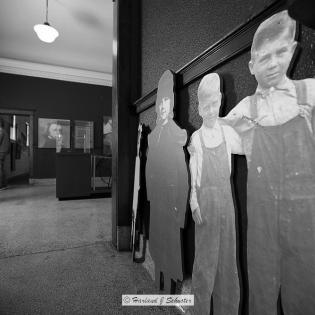
Display pictures of children from an article about the Orphan Train. Ask students to take a few minutes to respond to what they think is going on in hte pictures.
Explain the purpose of the lesson, which is to compare the Children's Aid Society and the New York Foundling Hospital to current philanthropic efforts to assist homeless children.
Distribute Homelessness: Then and Now - Reasons and Solutions (handout). Provide background information regarding the reform movements for homeless children in the 1800s (Children's Aid Society, New York Foundling Hospital - Sisters of Charity).
Arrange the class into teams of four. Each group should have a recorder, timekeeper, facilitator, and reporter.
- Have half of the teams to brainstorm reasons why there were homeless children in the late 1800s and possible solutions that were used at the time.
- The other half should brainstorm the causes of child homelessness and solutions for helping homeless children today.
Teams should put their answers on their charts. Give teams five to seven minutes to complete this activity.
Have the reporter from each group rotate to another group with the same focus. Give groups another 2 minutes to share and add onto their lists. Come back whole group and ask the recorder from each group to share one reason they came up with. Teacher record on screen while all students fill in Attachment One during this class discussion.
Define philanthropy as individuals and organizations providing their time, talent, and/or treasures intended for the common good throughout history and around the world. Have students use examples from their research showing how homelessness and philanthropy can be related.
Exit Ticket: Name two ways that child homelessness was addressed in the 1800s. How is this similar to how it is handled today? How is it different?
The teacher and students may choose any one of these projects. Students will research and identify agencies and organizations that provide services to children in the community. Students will determine and produce a method of disseminating information to the general student population after interviewing agency representatives who deal with children who are homeless. Students will visit/perform service for a local homeless shelter or other organizations that provide services to children who are homeless. Students will participate in the Empty Bowls Project.
Handouts

Philanthropy Framework
-
Strand PHIL.I Definitions of Philanthropy
-
Standard DP 01. Define Philanthropy
-
Benchmark MS.1 Define philanthropy as individuals and organizations providing their time, talent, and/or treasures intended for the common good throughout history and around the world. Give examples.
-
-
-
Strand PHIL.II Philanthropy and Civil Society
-
Standard PCS 06. Philanthropy in History
-
Benchmark MS.6 Trace the historic roots of philanthropy and describe how changes in society led to the development of organized philanthropy.
-
-
-
Strand PHIL.III Philanthropy and the Individual
-
Standard PI 01. Reasons for Individual Philanthropy
-
Benchmark MS.4 Identify and describe the actions of how citizens act for the common good.
-
-