Courageous Heroes
The learners define courage and describe the identity of someone with courage. They describe courage with words that show what it is and what it isn't.
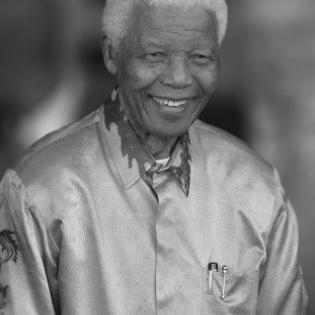
The learner will:
- define courage.
- describe courage by what it is and what it is not.
Instructions
Anticipatory Set:
Using the strategy of "Think, Pair and Share," the learners reflect and discuss an example and traits of a hero.
- Think: Quietly, on your own, think about and choose a real or fictional character, someone you would call a hero.
- Pair: Meet with one other person and each tell who you selected as an example of a hero and then discuss what behaviors and traits demonstrate the heroes' courage.
- Share: As a whole group, brainstorm the traits of courage that came up in the "pair" discussions. Have someone record these on a chart or document.
Courage may be defined as bravery; the ability to confront fear or uncertainty.
Draw a large T chart. Entitle the chart Courage. Label the left side of the chart "What it Is" Label the right side of the chart "What it Is Not." Ask the learners to suggest words or phrases to fill in each of the sections. Encourage them to think of what courage might look like, sound like, and feel like.
Ask the learners to return to their original "pair" groups to write an acrostic (a poem using the letters of a word as the first letter of each line of the poem) for the word "courage." They use the information generated during the brainstorming and discussions. Post the acrostics in the room for all to see.
Philanthropy Framework
-
Strand PHIL.II Philanthropy and Civil Society
-
Standard PCS 01. Self, citizenship, and society
-
Benchmark MS.4 Describe the characteristics of someone who helps others.
-
-
Standard PCS 02. Diverse Cultures
-
Benchmark MS.2 Describe the importance of hearing all voices in a community and respecting their right to be heard.
-
Benchmark MS.3 Give an example of how philanthropy can transcend cultures.
-
-
-
Strand PHIL.III Philanthropy and the Individual
-
Standard PI 01. Reasons for Individual Philanthropy
-
Benchmark MS.3 Identify and give examples of stewardship in cultural traditions around the world.
-
Benchmark MS.4 Identify and describe the actions of how citizens act for the common good.
-
Benchmark MS.5 Describe the responsibility students have to act in the civil society sector to improve the common good.
-
-