Intergenerational Friendships
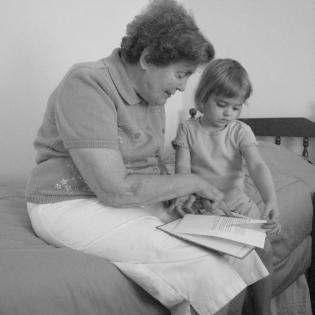
Through multiple visits to a retirement home, letter writing, or by inviting seniors to an event, children learn effective communication, sensitivity to people of different generations, and shared experiences while learning about the common good and stewardship.
The learner will:
- discuss common experiences and memories with an older community member.
- use effective communication skills.
- read-aloud copy of Wilfrid Gordon McDonald Partridge by Mem Fox
- Memory objects from previous lesson
-
Fox, Mem. Wilfrid Gordon McDonald Partridge. Kane/Miller, 1985. ISBN: 0916291049
Instructions
Anticipatory Set
Prepare the children for the visit by talking about respectful behavior, active listening, and sensitivity for people of a different generation. It is helpful to ask about their prior experience with grandparents and other senior friends and learn from one another. Brainstorm good discussion starters.
Meet with your senior friend. The children and seniors can do some of the following activities
- Read the book Wilfrid Gordon McDonald Partridge by Mem Fox together.
- Share with their new friend the memory item they brought from home.
- Bonus: arrange in advance for each senior to bring a memory item to share.
- Ask the senior to tell a story about volunteering or taking action for the good of all - philanthropy.
- Share a snack or play a game.
Continue the relationships with more visits and thank you notes between visits. The subsequent visits may have prepared topics (memories, family, community needs, favorites, games, toys, books, the future).
After each visit, meet with the children to discuss the experience. In what way is our visit an act of philanthropy (giving time, talent, or treasure for the good of all)? What did you learn from and about your new friends? What surprised you? What were you feeling? What were you thinking? What might they do differently? What excites them about future visits?
They write a letter or draw a picture to send to their senior friends. The letters or pictures should express one thing they enjoyed about the visit or something that they learned during the visit.
The students establish a friendship, over several visits and through writing, with a senior member of the community. These visits can be accomplished through field trips to a local retirement facility or by inviting senior members of the community to come to the classroom. Students continue to write letters to maintain the established friendship.
Read about the service-learning project called Big and Little Being Kind by Michigan students who were taught using this Intergenerational Friendships lesson to guide student learning and action.
Ms. Sandor is a director at an early childhood center in Michigan who said, "my motivation has been to promote kindness among young children--providing information and guiding children at a young age encourages lifelong caring and kindness."
Philanthropy Framework
-
Strand PHIL.IV Volunteering and Service
-
Standard VS 03. Providing Service
-
Benchmark E.3 Describe the task and the student role.
-
Benchmark E.6 Describe the procedures and the importance of sensitivity to the people with whom students are working.
-
-
Standard VS 05. Integrating the Service Experience into Learning
-
Benchmark E.2 Evaluate progress on the service-learning project before, during, and after the project.
-
-